I Burned Nearly 100 Million Tokens in One Day. Here’s What I Learned.

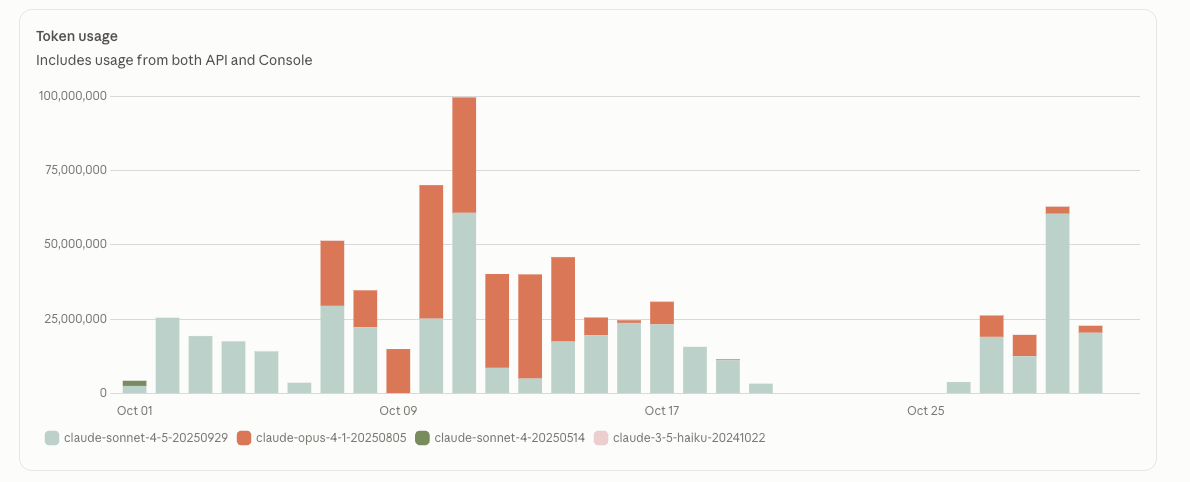
Well, that's a strong intro I guess?
How that happened?
100 Million tokens?
In one day?
I won't tell you how much did it cost me so I won't cry.
But...
Let's get into the story, shall we?
This is a dope one.
First, let's explain how this AI token thing work okay?
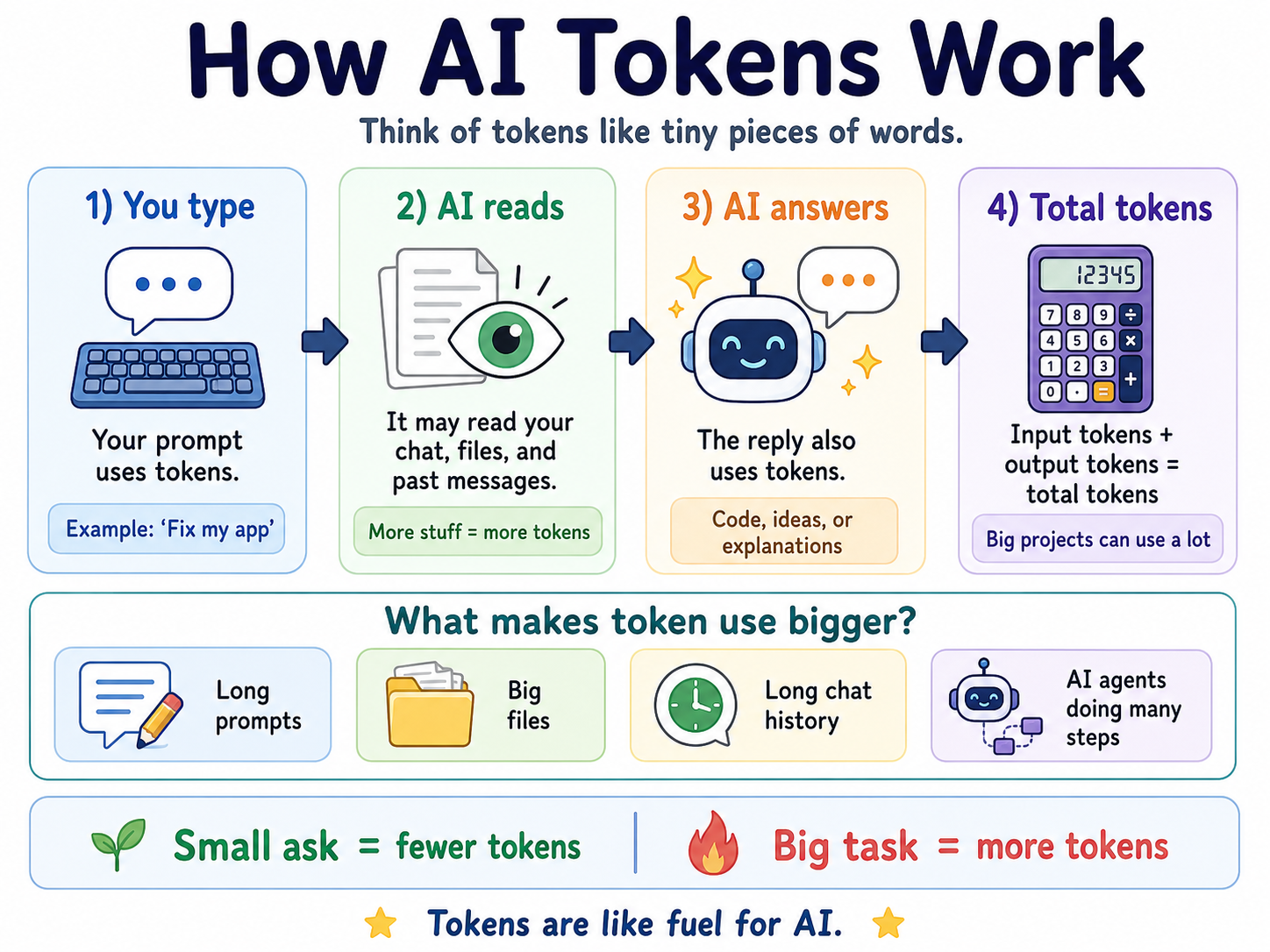
Imagine you were building a chicken nuggets AI startup.
You wanted to create a program that checks how many nuggets exist around the world.
Pretty cool, right?
Let’s say you use AI to build your product.
Every time you write code with AI, you give it a prompt or instructions, right?
When the AI model reads whatever you say, it uses tokens.
And those tokens cost money.
Simple flow:
Your input → AI model → output
Companies charge you for that.
The more input you give, the higher the cost.
The more powerful the model, the more compute it uses.
And the more compute it uses, the more money they charge you.
That’s it.
Coming back to my story.
Towards late 2025, I was building my AI startup - More on that soon!!
I was spending so much time on it.
I couldn't even wait to share it with the world.
I was into my feelings as Drake says.
And honestly…
I was brute-forcing everything.
Like, for real.
I didn’t want to go back and forth between models.
I was going all in with Claude Opus and Codex (Think expensive models)
I wanted things to move fast. I wanted good outputs.
I didn’t think much about my setup.
I was too focused on getting my ideas out.
I was throwing instructions here and there without any mercy.
Despite me knowing for sure there are better ways.
If I looked at my usage back then, I would be like...
Shit.
But that’s okay.
But looking back…
If I had spent more time researching models and understanding my workflow, I probably would have saved a lot of money.
Do I regret it?
Not really.
Because that magical feeling of building took over me a little too much 😄

But if I could give one piece of advice...
Learn the difference between models.
Understand what each one is good at.
Some models are better for speed.
Some are better for deep thinking or reasoning.
Some are better for coding.
Some are better for brainstorming.
Some are just way cheaper.
And that matters.
Understand when to use bigger models.
Understand when to use smaller models.
Understand the tradeoff.
Also try to experiment with open-source models.
Sometimes they’re free. But then you might spend more on your own machine or setup.
So everything has a cost.
At the end of the day, it depends on your workflow and how you like to build.
But don’t automatically assume expensive means better.
Zoom out.
Experiment.
Try different models.
And find the setup that actually works for you.
Because that's the final touch for you.
I will leave you with some cool blogs that will help you decide between models!
- OpenAI — Model Selection Guide
Best for understanding the basic tradeoff: accuracy, speed, and cost. This is perfect for your point that expensive models should not always be the default. - OpenAI — Models Overview
Best for seeing how OpenAI explains its own model lineup. Their guidance says to start with the flagship model for complex reasoning/coding, but use smaller variants when optimizing for latency and cost. - Anthropic — Choosing the Right Claude Model
Best for people using Claude and trying to decide between models like Opus, Sonnet, and Haiku. Anthropic frames model choice around capability, speed, and cost. - Anthropic — Claude Models Overview
Best for a simple overview of the Claude model family and what each model is meant for. Useful if someone wants to understand why they may not need the biggest Claude model every time. - Google Cloud — Gemini Models on Vertex AI
Best for people who want to compare Gemini models and understand what each one is built for across text, code, images, and video. - Google Cloud — Gen AI Evaluation Service
Best for people who want a more serious way to compare models using tests, metrics, and evaluations instead of vibes only.
Basically if you want to go deeper, start with the official model guides from OpenAI, Anthropic, and Google. They all basically teach the same important idea: don’t just pick the biggest model. Pick the model that fits the job.